
.

.
ALBUQUERQUE IS A POSTER CHILD
FOR BREAKING BAD
***
ALBUQUERQUE IS A POSTER CHILD
FOR BREAKING BAD
***
As New Mexico and Albuquerque have grown, so our national ranking
in various categories (and there are many)
has changed, almost always for the worst.
has changed, almost always for the worst.
This last June we finally kicked Mississippi
out of 50th place for "child welfare,"
and proudly assumed the title.
out of 50th place for "child welfare,"
and proudly assumed the title.
The Absolute Worst State in America for Kids.
Boy, what a place.
.
We rank in the bottom 5, of 50 states, in so
many categories, it's obscene.
We let Mississippi keep the highest teenage
pregnancy rate, but we're hot on their trail in
a close second spot. It makes you want to weep.
.
We rank in the bottom 5, of 50 states, in so
many categories, it's obscene.
We let Mississippi keep the highest teenage
pregnancy rate, but we're hot on their trail in
a close second spot. It makes you want to weep.
And a lot of politicians, bankers, developers, and other misguided folks -
the hopelessly lost, the eternally clueless -
would have us GROW! Let's have more, NOW!
Where are those Italiano folks with all the nice agua?
Where are those Italiano folks with all the nice agua?
.
The idea is hideously stupid. What drew people to New Mexico in
the first place is now quickly becoming a piece of the past.
We don't need to grow. We need to get a handle on what's
happening here, and make a sincere effort to do something
about quality of life issues, and forget about more
subdivisions, convenience stores, malls and meth.
.
 .
 .
.

We need to get a handle on things before we
completely ruin this place. Right in front
of us, it's quickly becoming what many
people would call a "shithole."
.
.
Grow? Why, for more of this?
Tap the San Augustin aquifer,
so a bunch of developers, politicians, and
foreign "investors"
can make mountains of cash?
And in the process,
this dump can get bigger?
Tap the San Augustin aquifer,
so a bunch of developers, politicians, and
foreign "investors"
can make mountains of cash?
And in the process,
this dump can get bigger?
Are you nuts?
Wait a minute, are you on meth?
Oh....you just make it. I see.
So you're pro-growth.
Well....of course.
What else would you be.
Wait a minute, are you on meth?
Oh....you just make it. I see.
So you're pro-growth.
Well....of course.
What else would you be.
.
 .
Yesterday four cops got shot in Albuquerque
when some maniac with an AK47 decided
to make war on law and order.
Some pathetic little fifteen year old
kid was going to court this morning,
the one who gunned down five family members
this past winter.
Daddy was a preacher man. Shot dead.
the one who gunned down five family members
this past winter.
Daddy was a preacher man. Shot dead.
The boy said he was upset with his mom.
Shot dead.
Poor little tyke.
Too many nutsy video games I guess.
.
 .
And the craziness is there,
on every local news channel,
every morning, noon, and night.
It's just a question of degree -
better? worse? the same?
Shot dead.
Poor little tyke.
Too many nutsy video games I guess.
.
And the craziness is there,
on every local news channel,
every morning, noon, and night.
It's just a question of degree -
better? worse? the same?
It just goes on, and on, and....
It's no wonder that many people from
the rural areas of the state just stay home.
Inside.
It's bad out there.
Yeah, and now it's breaking bad
just about everywhere in
The Land of Enchantment.
We're the "riskiest" state in the Union.
It's no wonder that many people from
the rural areas of the state just stay home.
Inside.
It's bad out there.
Yeah, and now it's breaking bad
just about everywhere in
The Land of Enchantment.
We're the "riskiest" state in the Union.
.
 .
.
 .
THE CRIME OF WHAT WE'RE DOING
TO OUR CHILDREN
.
THE CRIME OF WHAT WE'RE DOING
TO OUR CHILDREN
.
FROM EYEWITNESS NEWS
KOB4
.
.
New Mexico last in child well-being ranks
.
Posted at: 06/24/2013 6:43 PM
By: Stuart Dyson, KOB Eyewitness News 4
By: Stuart Dyson, KOB Eyewitness News 4

“Thank God for Mississippi” is a phrase well-known to many New Mexicans. That state has historically been dead last on every important quality of life list – but not anymore. Mississippi has moved up to 49th on the national “Kids Count” list, while our state has dropped to 50th.
New Mexico now ranks as the worst state in the nation when it comes to the well-being of our children. The “Kids Count” data-book ranks our state at number fifty, with low scores for things like education, health, and economic security. True, New Mexico never has ranked above 40th, but 50th place really hurts.
.
It’s not that we’re doing so much worse than we did last year. It’s just that Mississippi has made giant strides in things like the rate of kids attending pre-school. In fact teachers and school administrators say early education is the key to overall improvement in academic performance. 62 percent of New Mexico kids don’t attend pre-school, one of the lowest rates in the country.
“When we receive our kids and we see what it is that they’re lacking, they’re already behind the 8-ball,” said teacher Sonya Romero. “It makes it harder for us as teachers to catch them up in such as limited amount of time and with such limited resources that we have.”
.
Joan Baker owns and operates “My Happy Place” pre-school in Edgewood.
“The amount I’m able to pay my teachers, for the most part they can go make more working at McDonald’s or Arby’s,” Baker said. “At Smith’s being a bagger they can make more money. I have a high turnover and it’s hard for the kids to connect and learn when that teacher is gone in a few months.”
“This state lags behind in early childhood education,” said Albuquerque school superintendent Winston Brooks. In kindergarten we’ve got kids who can read just ten sight words and we’ve got kids who can read a novel. I think we have to really do a much better job with that.”
New Mexico got worse in the last year with almost one third of the kids living in poverty and 43 percent now in single parent families.
.
In fact most of the categories where New Mexico improved are in education, and most where the state got worse are in economic well-being. This last place ranking is yet another defining snapshot of just how devastating the recession has been in our state.
.

.

.
The Most Dangerous States in America
.
You might think that going to California, Texas or New York exposes you to a lot of crime.
But in fact it was Tennessee that had the nation’s highest violent crime rate last year.
.
But in fact it was Tennessee that had the nation’s highest violent crime rate last year.
.
The FBI’s latest statewide statistics offer a snapshot of the underside of the 50 states: where violent crime is most likely to occur. According to the FBI, violent crime includes murder, rape, robbery and aggravated assault. 24/7 Wall St. reviewed the states with the highest rates of violent crime in the country.
.
While violent crime rose just under 1% nationally in 2012, the trend for the past 20 years has been steady decline. Crime peaked in the late 1980s, fueled by the crack cocaine epidemic. Beginning in the early 1990s, crime began to decline. Although the exact cause remains unclear, experts have pointed to factors such as better policing, demographic changes, higher incarceration rates, a drop in cocaine use and the introduction of a variety of social programs.
In an interview with 24/7 Wall St., Urban Institute senior fellow John Roman pointed out that the crime decline has not been uniform. It has improved markedly in some large cities, like New York, Dallas and Washington, D.C. However, the decline has been less impressive in cities like Baltimore and Detroit, where economic and racial segregation limit the ability of the poor to move into the middle class.
.
The more the population is integrated, Roman explained, the greater the chances of sizable crime declines. Most crime is committed by people at the bottom of the economic totem pole, he said.
The apparent relationship between low income, low education and higher crime rates has been well documented, although identifying the cause and effect is still a matter of debate. It is clear, though, that these states for the most part match the national trend. Of the 10 states with the highest rates of violent crime, eight have lower rates of adults with bachelor’s degrees, and most of them had median income levels below the national figure in 2012.
.
To read the entire article, go here:
We've edited for brevity sake - obviously what concerns
us is the national ranking below.
.
4. New Mexico
Violent crimes per 100,000: 559.1
Poverty rate: 20.8%
Pct. of population with bachelor’s degree or higher: 26.1%
Property crimes per 100,000: 3,600.7 (4th highest)
Violent crimes per 100,000: 559.1
Poverty rate: 20.8%
Pct. of population with bachelor’s degree or higher: 26.1%
Property crimes per 100,000: 3,600.7 (4th highest)
For many Americans, New Mexico is Taos, Santa Fe and the big nuclear laboratory at Los Alamos. It is also a poor state. Its violent crime rate is the fourth worst in the country; its forcible rape rate is also fourth worst. It has among the highest rates of drug use in the country, which is known to encourage criminal activity. Its burglary rate is second worst. “We dare not pretend this does not have an effect on our economy or our overall quality of life,” former New Mexico legislator Dennis Kintigh wrote in the Albuquerque Journal earlier this year about the levels of violence in the state.
.

.

.
And here's an interesting fact:
.
ALBUQUERQUE (KRQE)
.
A former state representative,
who's also a former FBI agent and police chief,
says New Mexico isn't sending nearly enough
of its violent criminals to prison.
.
A former state representative,
who's also a former FBI agent and police chief,
says New Mexico isn't sending nearly enough
of its violent criminals to prison.
.
Dennis Kintigh crunched the numbers.
He says New Mexico has more murders and
violent crimes per capita than any other
state in the southwest.
He says New Mexico has more murders and
violent crimes per capita than any other
state in the southwest.
.
New Mexico also sends fewer of those
violent criminals to prison than any other state
in the southwest.
violent criminals to prison than any other state
in the southwest.
.
Kintigh says that's a failure
of the judicial system.
of the judicial system.
.
See the entire article here:
.

.
From NEWMEXICOWATCHDOG.ORG
.
From NEWMEXICOWATCHDOG.ORG
.
“Breaking Bad” actor complains about crime in ABQ; prepare for media explosion
.
Aaron Paul portrays one of main characters in the TV show
“Breaking Bad,” which is set — and filmed — in Albuquerque.
“Breaking Bad,” which is set — and filmed — in Albuquerque.
In the past, Paul has said some nice things about the city but
after becoming a crime victim for the second time, he took to
Twitter yesterday (April 10) to vent:
after becoming a crime victim for the second time, he took to
Twitter yesterday (April 10) to vent:
.

.

.
From TIME Ideas:
.
Breaking Bad Normalizes Meth, Argues Prosecutor
.

I work as a felony prosecutor in a town where methamphetamine is our biggest narcotics problem. I’m also a big fan of Breaking Bad, but whenever I ask colleagues (particularly law-enforcement officers) whether they’ve been following the show, I invariably get the same answer: “Absolutely not. I refuse to watch any show that glorifies that lifestyle.”
.
I certainly sympathize with those who are concerned about the glorification of methamphetamine. Meth is pure evil. Meth addicts are often barely recognizable as human, and every meth user is an addict; there is no such thing as a casual or social meth user, at least not in the end. People who use that drug will generally continue to do so until it destroys their lives and the lives of the people who care about them.
.
Read more: http://ideas.time.com/2013/09/20/breaking-bad-promotes-meth-use-argues-prosecutor/#ixzz2j7KZ36wV
.
 .
BREAKING BAD.
And they chose Albuquerque for the location.
Perfect. It really is. People not unlike people you meet
in the show are all over the place.
It's as though "Central Casting" got asked to
find the perfect "methhead" - but not a character,
A CITY!
An urban complex that embodies
the stupidity of the drug itself!
.
The politicians, city planners,
developers, lawyers, dealers, hustlers -
they're all part of the milieu here -
this dimwitted, short-sighted, fast buck,
head-up-your-ass approach to life.
All the bigger places, the cities in the region,
have this disease.
But Albuquerque is by far the dumbest -
the true idiot child of the urban southwest.
And it affects the entire state, to one
degree or another. It's contagious.
And these days, it can even be fatal.
.
 .
 .
.
 .
In Albuquerque,
there used to be certain zones where you find stuff,
and there still are, generally.
However, those lines are changing, boundaries
are expanding.
And it ain't just meth, and it sure as hell
isn't limited to "bad" areas of town.
Oxy and Cocaine roll downhill from the Sandia Foothills
to the adobe palaces of the North Valley
and Corrales.
But there they're connected and seemingly protected.
The well-to-do. Los patrones.
.
Yet there's no actual safe or untouched zones, not any longer.
Just neighborhoods that like to think they are.
Gated places. Rent-a-cops. Guns. More guns.
.
"Our kids don't do drugs."
Well, maybe some of yours don't lady, but one hell
of a lot of people here DO, including a lot of kids.
The drugstore is open...all over town.
Pot's blase. Anything that mild isn't even cool,
unless it's high grade, and high ticket.
The show of money is always....well, "awesome,"
as the kids know, or think they do.
.
But murder and mayhem are possible anywhere.
Druggies, as we can all see now (if we didn't
know this before watching the series)
are neither dependable, nor predictable.
The cops are outnumbered and overwhelmed.
APD has serious manpower problems.
And the drugs just keep on rollin'.
.
The poison has spread cross the state, with no
regard for legal, historical, or cultural boundaries,
with no regard to "your place" in life,
or your job, if you have one,
or your future.
Albuquerque really is a sort of
POSTER CHILD
for BREAKING BAD.
ALBUQUERQUE RULES!!!
.
 .
I was born at St. Joe's Hospital,
and have spent time in The Duke City off and on
over the years. I went to college there with Tom Swisstack,
today the Mayor of Rio Rancho, that slice of
misguided Americana, with all the cookie-cutter houses,
and those abominable New Yorkers who saw
the Rio Rancho ads in The New York Times
many years back.
And then she said:
"Morty, look at this! And the prices are giveaway!
We could live like kings for the same amount
of money as we throw away here!
Morty, the air's clean and there's hardly
any blacks, just some injuns and messycans,
and they have pueblos and barrios and all that.
You could play golf nearly every day!
Morty, are you listening to me?
I hear you Maya, I'm listening....yeah....golf....
Zzzzzzz......"
.
 .
But of course Rio Rancho has a lower crime rate
now than most areas of the state.
INTEL is there, and they have jobs, though large
numbers of their new employees are always
from out-of-state.
They also USE A LOT OF WATER .
But there's no real economic security here.
INTEL'S facilities could be a ghost factory
five or ten years from now.
Things change. Like markets.
Like the world.
Like Rio Rancho.
.
 .
Naturally, the foreigners, via Michel Jichlinski,
have made a DIRECT effort to lure Rio Rancho
into their scheme.
Jichlinski made a special presentation to the
staff from the Rio Rancho Observer
last Spring. The article
that resulted -
"PROJECT MAY MOVE WATER TO AREA"
is interesting.
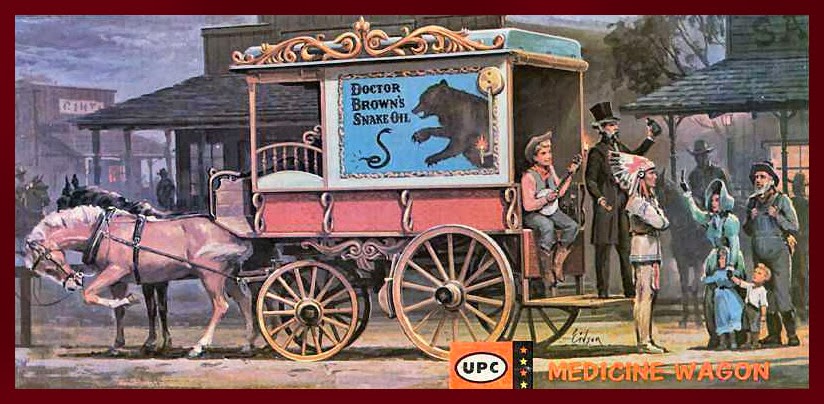
Jichlinski is as good a snake oil salesman
as you'd find preachin' off a wagon
anywhere in the West.
And there's a lot of 'em.
Always have been.
But we actually got the last word here.
And the last word is....read on:
http://www.rrobserver.com/news/local/article_9857bff2-a6d7-11e2-96e5-001a4bcf887a.html
.
 .
 .
BREAKING BAD.
And they chose Albuquerque for the location.
Perfect. It really is. People not unlike people you meet
in the show are all over the place.
It's as though "Central Casting" got asked to
find the perfect "methhead" - but not a character,
A CITY!
An urban complex that embodies
the stupidity of the drug itself!
.
The politicians, city planners,
developers, lawyers, dealers, hustlers -
they're all part of the milieu here -
this dimwitted, short-sighted, fast buck,
head-up-your-ass approach to life.
All the bigger places, the cities in the region,
have this disease.
But Albuquerque is by far the dumbest -
the true idiot child of the urban southwest.
And it affects the entire state, to one
degree or another. It's contagious.
And these days, it can even be fatal.
.
In Albuquerque,
there used to be certain zones where you find stuff,
and there still are, generally.
However, those lines are changing, boundaries
are expanding.
And it ain't just meth, and it sure as hell
isn't limited to "bad" areas of town.
Oxy and Cocaine roll downhill from the Sandia Foothills
to the adobe palaces of the North Valley
and Corrales.
But there they're connected and seemingly protected.
The well-to-do. Los patrones.
.
Yet there's no actual safe or untouched zones, not any longer.
Just neighborhoods that like to think they are.
Gated places. Rent-a-cops. Guns. More guns.
.
"Our kids don't do drugs."
Well, maybe some of yours don't lady, but one hell
of a lot of people here DO, including a lot of kids.
The drugstore is open...all over town.
Pot's blase. Anything that mild isn't even cool,
unless it's high grade, and high ticket.
The show of money is always....well, "awesome,"
as the kids know, or think they do.
.
But murder and mayhem are possible anywhere.
Druggies, as we can all see now (if we didn't
know this before watching the series)
are neither dependable, nor predictable.
The cops are outnumbered and overwhelmed.
APD has serious manpower problems.
And the drugs just keep on rollin'.
.
The poison has spread cross the state, with no
regard for legal, historical, or cultural boundaries,
with no regard to "your place" in life,
or your job, if you have one,
or your future.
Albuquerque really is a sort of
POSTER CHILD
for BREAKING BAD.
ALBUQUERQUE RULES!!!
.
I was born at St. Joe's Hospital,
and have spent time in The Duke City off and on
over the years. I went to college there with Tom Swisstack,
today the Mayor of Rio Rancho, that slice of
misguided Americana, with all the cookie-cutter houses,
and those abominable New Yorkers who saw
the Rio Rancho ads in The New York Times
many years back.
And then she said:
"Morty, look at this! And the prices are giveaway!
We could live like kings for the same amount
of money as we throw away here!
Morty, the air's clean and there's hardly
any blacks, just some injuns and messycans,
and they have pueblos and barrios and all that.
You could play golf nearly every day!
Morty, are you listening to me?
I hear you Maya, I'm listening....yeah....golf....
Zzzzzzz......"
.
But of course Rio Rancho has a lower crime rate
now than most areas of the state.
INTEL is there, and they have jobs, though large
numbers of their new employees are always
from out-of-state.
They also USE A LOT OF WATER .
But there's no real economic security here.
INTEL'S facilities could be a ghost factory
five or ten years from now.
Things change. Like markets.
Like the world.
Like Rio Rancho.
.
Naturally, the foreigners, via Michel Jichlinski,
have made a DIRECT effort to lure Rio Rancho
into their scheme.
Jichlinski made a special presentation to the
staff from the Rio Rancho Observer
last Spring. The article
that resulted -
"PROJECT MAY MOVE WATER TO AREA"
is interesting.
Jichlinski is as good a snake oil salesman
as you'd find preachin' off a wagon
anywhere in the West.
And there's a lot of 'em.
Always have been.
But we actually got the last word here.
And the last word is....read on:
http://www.rrobserver.com/news/local/article_9857bff2-a6d7-11e2-96e5-001a4bcf887a.html
.
.


